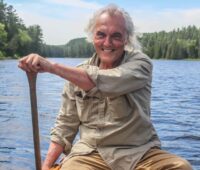
The Mississippi Valley Field Naturalists’ October meeting continued on the theme for this program year: “Biodiversity Makes a Difference”. Members and guests were treated to a presentation by Michael Runtz: “Wetlands – Oases Of Life”. A well-known local naturalist, Michael explained wetlands’ importance and the rich biodiversity they support. Wetlands provide water, food and shelter for a myriad of species. His photographs illustrated their varied, remarkable plants and animals. A naturalist since age five, Michael is an award-winning retired university Associate Professor, author, and photographer.
Michael began by defining wetlands, explaining that they are most easily identified by the plant species growing there, with roots under water. Michael explored different wetland types: bogs, fens, marshes, swamps and shallow open water wetlands, highlighting some of the species each supports. Differences in nutrients attract different species. He noted that Ontario’s Hudson Bay Lowlands form one of the world’s largest continuous wetlands – possibly the largest.
Wetlands store water and supply essential food and habitat for a wide variety of plants and animals. Michael explored several fascinating carnivorous plants, including sundews, pitcher plants and bladderworts. He recounted a researcher’s discovery in Algonquin Park of a pitcher plant that had consumed a juvenile salamander—believed to be North America’s first documented case of a pitcher plant eating a vertebrate.
Different wetlands support stunning flowers including several orchid species; reeds, rushes and grasses; and trees including tamarack and black spruce. There are also aquatic plants such as white water lilies, bullhead lilies and water shield. Michael then highlighted distinctive wetland butterflies. The poisonous bog bean buckmoth is a rare, unique species, found at only two Canadian locations. He described various dragonflies and damselflies such as the crimson-ringed whiteface and elfin skimmer.
Wetlands are also home to northern watersnakes, frogs such as spring peepers and turtles such as Blandings turtles. While Blandings turtles are a species of concern in Ontario, we are fortunate that they can be seen somewhat regularly in our area, although they don’t gather in numbers. There are many insects to be found in wetlands, such as whirligig beetles, water boatmen and water striders. Wetlands also support birds such as sandpipers, spruce grouse, rails, eastern kingfishers and great blue herons. Michael also showed photos of some of the mammals found in wetlands, including moose, mink, otters and muskrats.
No discussion of wetlands is complete without beavers, whose wetlands grow richer and more diverse over time. Beavers are a keystone species known as nature’s “ecosystem engineers”. Michael described the many adaptations of the beaver, including their distinctive orange teeth. The colour comes from iron-rich enamel coating a softer dentine. Their teeth are self-sharpening and never stop growing. Beavers also use their keen sense of smell to distinguish tree species by the scent of their bark.
Attendees left with a deeper appreciation of wetlands and their rich biodiversity. Michael’s many examples illustrated the variety of species these habitats support and their interdependencies. His photographs captured their beauty and illustrated fascinating facts about them.
Submitted by Chris Baburek